Flamenco dance classes in Derby counted slowly before it is danced loudly
Beginner flamenco in Derby with the terms stated rather than implied: £10 a time or £32 for four, the hired room already inside that figure, no Spanish required and no company to audition for. Nothing gets scheduled until enough Derby names are on the list, because a class invented before that point would only be a guess.
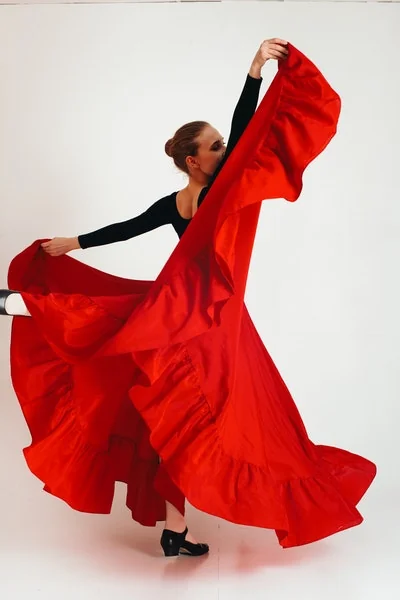
The count arrives before the noise
Flamenco is loud on purpose, but volume is the last thing a beginner gets handed. What comes first is the cycle running underneath it, taken at a speed that lets you actually hear where the accents fall.
Nobody is teaching this locally, so the list has to do the asking
Five fields, no level to claim, no dance history to account for. When the flamenco list grows long enough to make hiring a room sensible, everyone on it receives the same message with the address, the date and the start time, and each person decides from there. A name costs nothing and obliges nothing, but it is the only thing that moves this style off a page and into a room.
Where the names sit matters: a handful clustered out towards Ashbourne genuinely tilts the hire in that direction.
Flamenco without the gatekeeping it usually arrives with
"The feet are the famous part and the last part. What the first weeks build is an ear, a spine, and a pair of arms that know where they are going." Roughly every beginner course, everywhere
Beginners meet the cycle first — the twelve-beat compás, with its accents sitting in places nobody expects — and usually through the hands, because a rhythm learned by clapping transfers to the feet far more reliably than one learned by copying. Then come the arms: the slow, unhurried braceo circling overhead while the wrists turn, and the marking steps that keep you inside the count without any showing off. The rattling footwork the style is famous for arrives when the count underneath it is solid, and not one session earlier.
No Spanish is needed, no palo has to be chosen in advance, and nothing here feeds a company or a stage. The vocabulary gets translated as it turns up, which is plenty. Whoever takes the room sets the pace once they have met it, so nothing is promised as a syllabus and nobody is being marked on anything at the end of an hour. Beginner rooms in this style are rare enough that nobody inside one has any business being snobbish about anybody else in it.
Any closed shoe with a hard heel makes a usable sound on a wooden floor. Proper nailed shoes are a serious purchase for much later — we do not sell or hire out footwear, and you will not need a pair to start.
Why no start date can honestly be printed here yet
One class£10, room included, nothing signed and nothing stored.
£10A run of four£32 once the count has started making sense.
£32Owed to usTerms, plans, exams, company auditions, minimum attendance.
noneThe standard local offer is a recurring weekly slot sold as a course or a block, with the fee revealed after an enquiry rather than before one. Flamenco barely features in that offer at all, which is why this page leads with two numbers and no timetable. The room gets hired once the list justifies hiring it, and everybody learns the day, the time and the address in the same message. Come once, come four times, or put a name down and never follow it up — the arrangement survives all three, because nothing was bought in advance. Rarity is the entire reason a list exists at all: a style this thin on the ground has to be asked for before it can be supplied.
Worth a name?A style this rare only appears where enough people ask for it out loud.
Join the list ↑Two things the list has sent in
"I clapped badly for about three weeks and then something clicked and I could hear where the twelve was. Nobody made me feel stupid in the meantime, which is the only reason I stayed around long enough to get there."
"I had been looking for this locally for years and found nothing at all aimed at beginners. Put my name down, waited, got a message with a room and a start time, and paid on the way in like it was a cinema ticket."
Questions from people about to start
The common thread is a suspicion that this style is closed to outsiders. It is demanding, which is a different thing entirely, and demanding is survivable at a tenner a go.
Is any Spanish needed to follow along? +
None. The handful of terms that matter get translated the first time they appear and then stay in use.
What is compás and why does it matter? +
It is the rhythmic cycle everything sits inside. Learn it and the rest of flamenco becomes teachable.
Do beginners stamp from the very start? +
A little, and quietly. Clean single sounds come first — speed is what the later weeks exist for.
Which shoes work for a first flamenco hour? +
Any closed shoe with a hard heel. Nailed shoes are a far-off purchase, and no footwear is lent here.
Does the hour involve any clapping at all? +
Plenty. Palmas are how the count gets into your body before the feet can be trusted with it.
Is this building towards a performance somewhere? +
No. There is no company, no showcase and no audition sitting anywhere behind this class.
How is the location decided in the end? +
By the list. A central Derby room gets hired once there are enough names, steered by their postcodes.
Why is the price printed on this page? +
Because almost nothing else locally prints one, and £10 is easier to weigh up than an enquiry form.